

Tuition centres are like any other commercial services, and you want to understand exactly what kind of teacher, class, and syllabus you are signing up for. Use these six important questions to guide you in picking the best tuition centre.
Read More
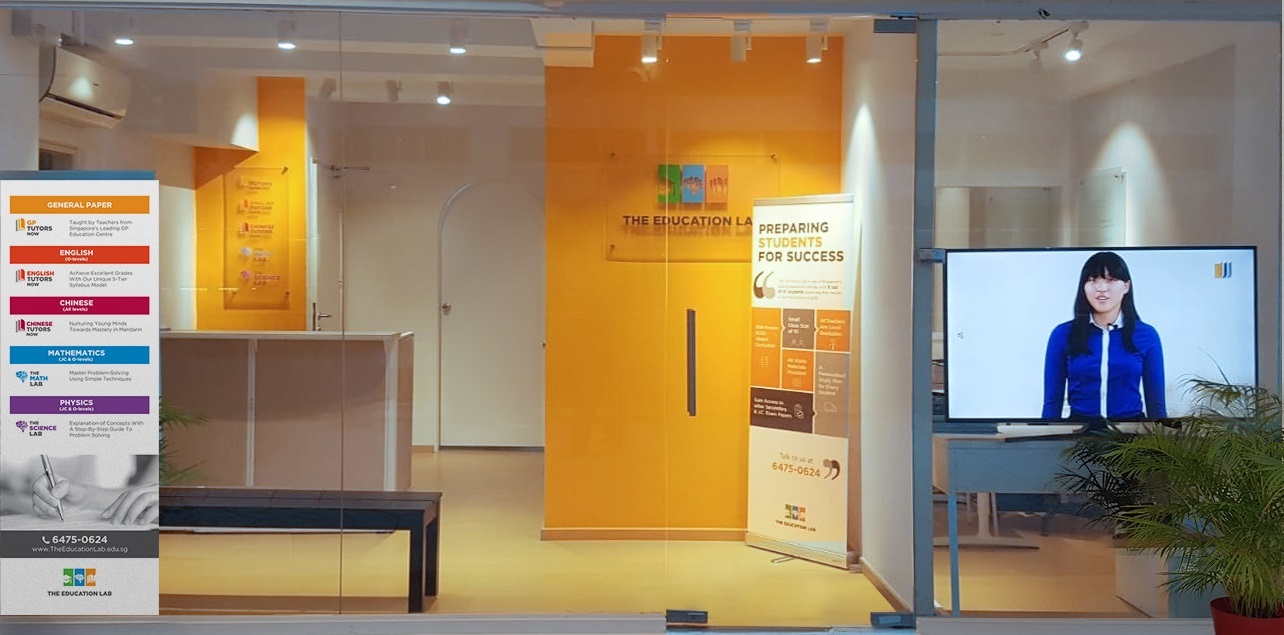
Our popular PSLE Bootcamp is a 5-day (Mon-Fri, 10am-3pm daily) intensive PSLE Revision Programme. It is specifically designed to help students be fully-prepared in all Math PSLE topics for examination.
● 5-Day Intensive PSLE Revision Programme
● Taught by our most experienced teachers
● Step-by-Step Revision of All Exam Topics
● Intervals with Fun & Exciting Math Games
● All Class & Revision Materials Provided
● Daily Lunch, Snack & Refreshments Provided
● See our actual Bootcamp filmed by CNA here
Each Bootcamp has a size of 7-12 students. Bootcamp Registration Fees are $1,250.00. See Bootcamp Details
2026 Classes Start in Nov/Dec 2025: Join Our Popular Small Group Classes (only 3-4 students on average) taught by MOE Teachers! ― Our Small Group Classes allow students to receive highly personalised tutoring, but at group class fees ($420/mth). Each class is 3-4 students, and each student is taught individually by the teacher in turn. Students generally see a tangible progress in grades within 3 months.
2026 Home Tuition Enrollment: Enrol in Our Extensive 1-1 Home Tuition Programme ― Half of our students now opt for our Math Home Tuition Programme. Home tuition gives the convenience of having a 1-1 tuition class right in your residence. Home Tuition students follow our highly established 1-1 Math Syllabus, and all materials are provided by us.
The Math Lab was started by 2 ex-MOE Math Professors ― with a simple goal of making the learning of Math efficient, engaging & fun. Unlike other tuition centers, we have chosen to focus only on Math because we believe it is where our core strength lies. We focus all resources on perfecting the Math paper. This is why our students continue to ace the exams every year.
Your Math education is important to us. That’s why we continually (1) seek the best Math tutors, (2) created a dedicated syllabus committee, & (3) source for materials from top schools. Our teachers go to extensive efforts to make all academic resources readily available to our students. So that when our students go for the Math exams, we have quiet confidence in their ability to outperform their peers.
Since Math Lab was started in 2002, we have now grown to multiple branches around Singapore, with thousands of students benefiting from our unique pedagogical approach. Together with our team, we promise to continue bringing you one of the most effective & engaging mathematics learning experiences in Singapore.
Tell us your Math tuition enquiry. We reply within 1 working day. Please also let us know which Branch you wish to join.
The Math Lab was started by 2 ex-MOE Math Professors ― with a simple goal of making the learning of Math efficient, engaging & fun.
Unlike other tuition centers, we have chosen to focus only on Mathematics because we believe it is where our core strength lies. We focus all resources on perfecting the Math paper. This is why our students continue to ace the exams every year.
Your Math education is important to us. That’s why we continually (1) seek the best Math teachers, (2) created a Syllabus Committee, and (3) source for materials from top schools. Our teachers go to extensive efforts to make all academic resources readily available to our students. So that when our students go for the Math exams, we have quiet confidence in their ability to outperform their peers.
Since starting in 2002, we have now grown to multiple branches, with thousands of students learning with us. Together with our team, we promise to continue bringing you one of the most effective & engaging math learning experience in Singapore.
Tell us your Math tuition needs. We reply within 1 working day.

Click the Whatsapp Icon to speak with us. Or call 6475-0624.
In this video, we introduce you to 8 teachers who make up part of our core teaching group at The Math Lab. Our teachers are our greatest strength, and many are 1st Class Honours graduates.
They make learning Math not just easy, but fun and rewarding! With years of experience, unique teaching styles, and a passion for nurturing young talents, our teachers are here to help your child excel in Math and ace the examinations!
Our most Popular Math Tuition Programme! We have Small Group Classes for Primary, Secondary, and JC levels. Small Group classes are small size classes (only 3-4 students on average), and the students are taught individually by the teacher in turn. This allows the teacher to create a lesson plan for each student, so this class is specially designed to help weaker students.
Join our Math Home Tuition programme ― one of the largest dedicated Math Home Tuition programmes in Singapore! Home tuition classes are taught by the same teachers that teach at our centres. Simply share your location with us and we will let you know which of our teachers are available to come to your residence.
Our Online Classes (both 1-1 or Group classes) allow students to have Math lessons right from your own living room. We will walk you through the set-up process, and all mateirals will be sent to you before class. At the scheduled class time, just turn on your computer & start your class!
Join Our Highly Popular June-Holiday PSLE Bootcamps taught by our most experienced Teachers, and featured in CNA!
Our PSLE Bootcamp is a 1-week long (Mon-Fri, 10am-3pm daily) intensive PSLE Revision Programme. It is specifically designed to help students be fully-prepared in all PSLE examination topics. There will be a step-by-step revision of all exam topics, intervals with fun & exciting math games, and lunch & refreshments are provided too! There are 3 bootcamps on 3 different weeks.

Join Our O-level Comprehensive Revision Bootcamps (both E-math & A-math), taught by ex-MOE professor Dr Ng.
Our O-level Bootcamps are also 1-week long (Mon-Fri, 10am-3pm daily), and cover a comprehensive revision of all O-level E-maths & A-maths topics. There are different bootcamps for A-math & E-math. We will systematically break-down each topic, as well as identify past problem areas for you. There are 3 E-math Bootcamps & 2 A-math Bootcamps.
CNA 938FM reached out to us to discuss the learning of Math in Singapore. Dr Ng E-Jay (Head Teacher) appears as a guest speaker on their Asia First talk show, where he discusses the difficulty Singapore students face learning Math. As well as how the MOE Math syllabus can be tweaked to better prepare students for real-life applications where Math is required. And finally, what steps students can take to try to master math as a subject.

Here at The Math Lab, we are very proud of the work we do everyday ― that of training the minds of a future generation. In fulfilling our mission, we have assembled a team of educators who are both proficient at giving instruction & also highly adept academically.
We have rigorous interviews & strict hiring practices; and today our core team of teachers comprises alumni from world-class universities.
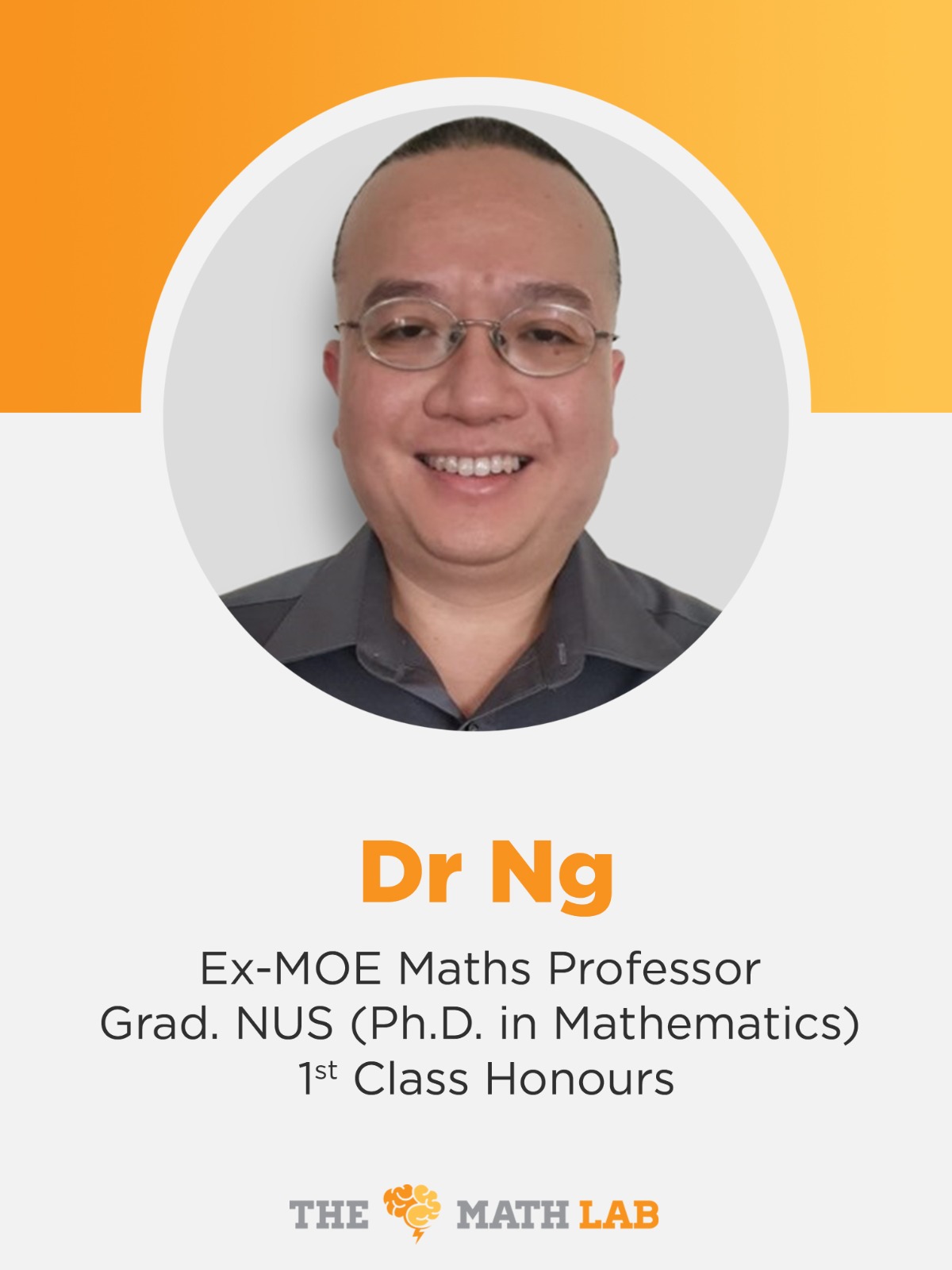
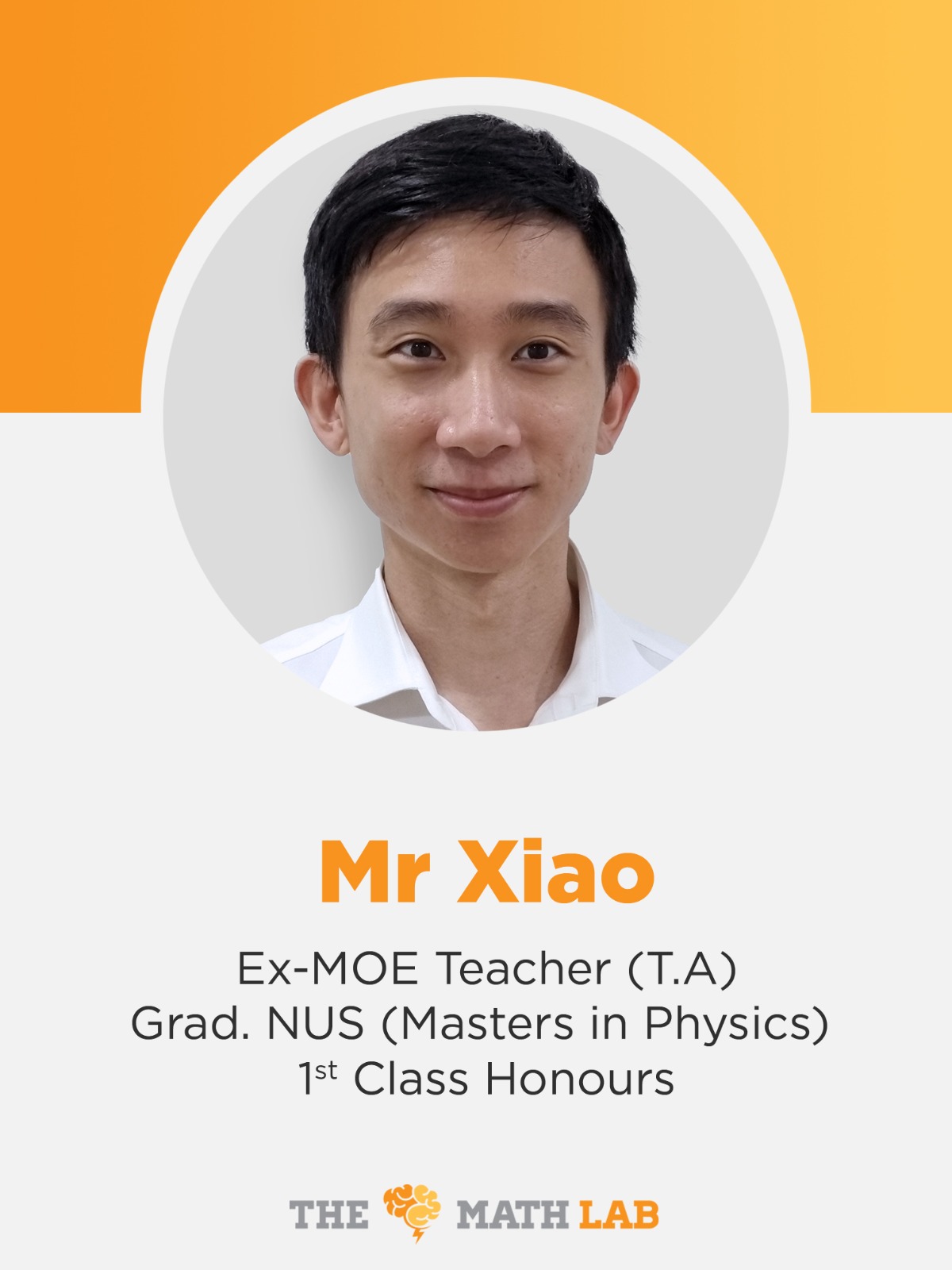
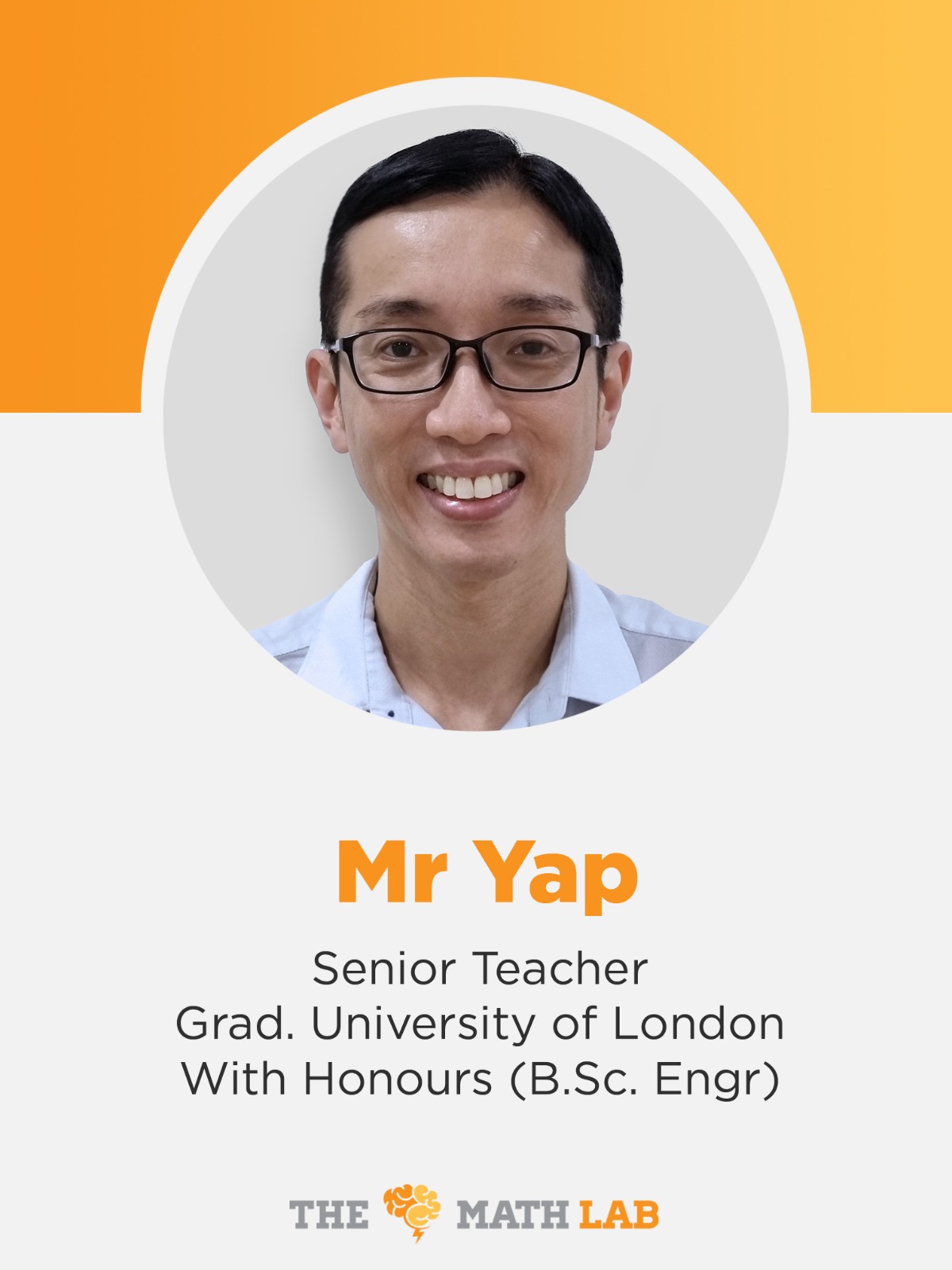
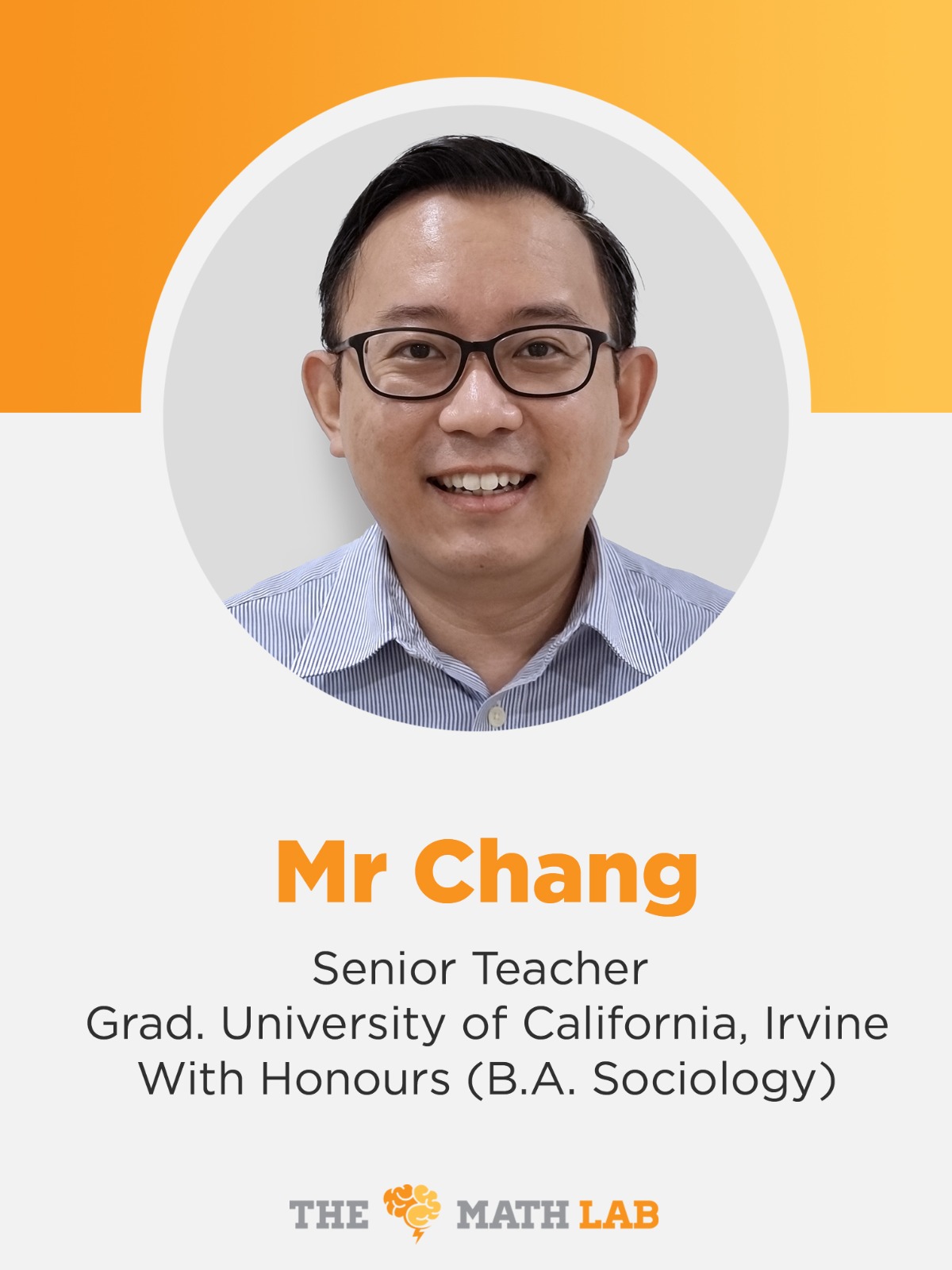
We have Maths classes for all Primary, Secondary, and JC levels. For each level, we have two main types of classes, the smaller Intensive class & the larger Standard classes. We also have specialised Holiday Programmes & Remedial Classes for weaker students to catch up.
Our 1-1 Classes may be conducted either at (1) our Centre or as (2) Home tuition. Our teachers are highly experienced, and many are scholarship recipients themselves. 1-1 Classes are taught based on our Intensive Syllabus, and all required materials will be provided.
Our Online Tuition allows students to have lessons right from their own home computer. We will walk you through the computer set-up process, and all required mateirals will be sent to you before the class starts. At the scheduled class time, simply turn on your computer and start your video-conference class with us.
The Math Lab was founded upon a simple mandate: to create an effective and engaging Maths learning experience for Singapore students. Over the course of our work, we have come to adhere to two core principles upon which our success is built upon ― (1) an honest & direct communication with parents, and (2) the need to keep our classes small.
From the moment you contact us, one of our Senior Teachers will initiate a phone call to speak directly with you as the parent. We feel that speaking over the phone allows us as teachers to more fully understand your child’s needs. It also gives you the opportunity to ask questions directly to an actual teacher (as opposed to a receptionist).
When you join any of our classes (either Group Class or 1-1 Home Tuition), even before the first class starts, the teacher for that class will also contact you directly by phone within 1-2 days. We do this to introduce ourselves to you, and to ask about your child’s Maths so we can better prepare for the first class.
Parents will always have a direct line of communication with their child’s teacher(s), and you may reach out to us at anytime. This takes significant resources on our part, but our experience shows that students make the most progress in tuition when their parents are highly vested in their learning.
We created our Small Group Classes with a simple goal in mind ― to make Maths tuition lessons highly personalised for each student, yet still affordable to most parents.
Unlike other centres that have large classes of 15 or 20 students. We have kept our Small Group Classes to an average of only 3-4 students (max 5 students).
We do this because we have seen the very tangible progress made by students when they receive personalised attention from their teacher. Small class sizes allow us to create individual lesson plans for each student, so we can focus the limited lesson time on the topics & questions the student needs most help in.
Large classes are economical, but we have seen how a large one-size-fits-all teaching approach tends to alienate the very students that need the most help. Our mandate remains to help students as best we can, and to do so, we commit to keeping our class sizes small and our teaching personalised.
76% of our PSLE students got AL1 or AL2 (2025 PSLE Results)
73% of our O-level students scored an A1 or A2 (2025 O-level Results)
61% of our A-level students obtained a distinction (2025 A-level Results)
*Above figures only apply to students studying with us the entire academic year
97% of all students improved their grades from their previous year
Our teachers at The Math Lab are MOE-registered. Attaining MOE-registration requires teachers to submit their A-level & university transcripts to be vetted by the Ministry of Education. MOE also does a background check to ensure the individual is a “person of good moral standing”, and without any prior infractions with the law.
We understand parents need a high level of certainty when engaging a tutor ― certainty that the tutor possesses proficient knowledge of the subject matter, and that the tutor is of good moral standing. We require our teachers to be MOE-registered, so that when your entrust your child to us, you will have the peace of mind that your child is in good hands.
Student-to-teacher ratios are important to us. Studies show that smaller class sizes correlate with better student participation & interaction. Lesson plans can also be tailored to better meet the needs of individual students. This is why we keep our classes small and cohesive.
Student-to-teacher ratios are important to us. Studies show that smaller class sizes correlate with better student participation & interaction. Lesson plans can also be tailored to better meet the needs of individual students. This is why we keep our classes small and cohesive.
Quality materials & handouts are necessary for students to improve. Aside from lectures and classes, our take-home materials are the 2nd most important way we help our students do well.
Our teachers continually source for the latest MOE exam papers, the most recent assessment books, and the most updated school notes for our students. So whether you are working on Log Functions or Trigonometry, you will always have a complete and detailed set of notes by your side.
All rooms are set to 23 deg C for productive learning
Classrooms are fitted with HDTVs and projector screens for visualisations
Our desks are corporate-styled conference tables with pine-wood trimings
All our classrooms are set to 23 deg C for productive learning. And all rooms are fitted with HDTVs and projector screens for visualisations. Our desks are corporate-styled conference tables with pine-wood trimings.
We spend a significant amount of time & resources to create a syllabus that is both highly effective & complete. We understand that students have busy schedules too. Our goal is to create a syllabus that allows the student to outperform in the examinations, yet does not require excessive studying time.
The Mathematics exam paper can seem overwhelming at first, with numerous topics, multiple concepts, and endless equations ― but we are confident that, if a student puts in the requisite effort, they can master the required topics in time for the exams. Our syllabus is continually revised every year, so that we focus on the most relevant topics and use the most updated lesson plans.
We have collaborated with an NGO & MOE to provide subsidised tuition for students from lower-income families. We conduct these classes at MOE schools on weekends. We hope to do our small part for the Singapore community.
We have collaborated with NGOs & the MOE to provide subsidised tuition for students from lower-income families. We conduct these classes at MOE schools on weekends. We hope to do our small part for the Singapore community.
Tuition centres are like any other commercial services, and you want to understand exactly what kind of teacher, class, and syllabus you are signing up for. Use these six important questions to guide you in picking the best tuition centre.
Your child used to bring home test papers you were proud of. Now the marks are dropping, homework takes twice as long, and every math conversation ends in tears or silence. If you’re searching for why this happened, you’re not alone. This is one of the most common concerns Singapore parents raise with us, and it almost always comes from the same handful of causes.
The short answer: your child probably isn’t suddenly bad at math. Something in how math is being taught, tested, or built on has changed faster than their skills have caught up. Here’s how to tell which one, and what to do about it.
If you look closely at when the slide started, it tends to cluster around a few specific points in the Singapore syllabus. That’s not a coincidence.
Primary 4 to Primary 5. This is the single most common point where parents notice a sudden drop. Up to Primary 3, math is largely computation: apply the formula, get the answer. From Primary 4 onward, word problems demand that a child first work out which concept applies before they can even start calculating. A child who was strong at following steps can suddenly look lost, not because they forgot how to add fractions, but because nobody told them this question needed fractions in the first place.
Secondary 1. The jump from PSLE to Secondary 1 math is often underestimated. New notation, new topics like algebra and negative numbers, and a much faster teaching pace all arrive in the same few months, right when your child is also adjusting to a new school, new friends, and a new timetable. We’ve written a full guide to this transition here: Sec 1 Math Tuition: Surviving the Jump from PSLE to Secondary School.
Secondary 3. This is when the syllabus becomes genuinely abstract, and for students taking Additional Math, the content moves quickly from concrete to conceptual. A student who coasted through E Math in Sec 1 and 2 can hit a wall here if the foundational algebra wasn’t fully solid to begin with.
If your child’s dip lines up with one of these three points, that’s a strong sign this is a syllabus-jump problem, not a “my child isn’t good at math” problem.
Math is cumulative in a way few other subjects are. A student who is 80% solid on fractions will feel that gap again in ratio, again in percentage, and again in speed problems, because all of these build on the same underlying skill. Each time it resurfaces, the gap looks slightly different on the surface, which is why parents often feel like new problems keep appearing out of nowhere.
This is also why AL3 students at PSLE, for example, are rarely missing large chunks of content. They’re usually dropping small, recoverable marks in several places at once: a careless slip here, an incomplete working there, a question left half-attempted because time ran out. We break this down in detail in How to Go From AL3 to AL1 in PSLE Maths, and the same pattern shows up well before Primary 6.
Before assuming your child needs a complete overhaul, sit down with a recent test paper and work through these:
1. Are the wrong answers clustered around one topic, or spread across many? Clustered mistakes point to a specific content gap you can target directly. Scattered mistakes across otherwise-known topics usually point to carelessness, time pressure, or exam technique rather than understanding.
2. Is there working shown, even for wrong answers? No working at all is often a bigger warning sign than a wrong final answer. It usually means the child doesn’t have a reliable method to fall back on, so they’re guessing or freezing.
3. Can your child explain the method out loud, without the paper in front of them? If they can explain it clearly after the fact but got it wrong under exam conditions, this is a performance and speed issue, not an understanding issue. If they genuinely can’t explain the method, the gap is conceptual.
4. Has your child stopped attempting certain question types altogether? Skipped questions are a quiet form of avoidance. A child who once attempted everything and now leaves multi-step questions blank has often lost confidence faster than they’ve lost ability, and confidence is usually the first thing to go and the last thing parents notice.
Not every dip needs tuition right away. A few things worth trying first:
If the gap is isolated to one topic and your child can still explain the concept when asked, a few focused practice sessions at home may be enough. Consider tuition when any of the following apply: the gaps are spreading across topics faster than you can track them, your child has started avoiding math homework altogether, the dip lines up with one of the transition points above and school lessons are moving too fast to allow catch-up, or you’ve tried the error-log approach for a few weeks and the same mistakes keep recurring.
At The Math Lab, this is exactly the kind of pattern our teachers are trained to diagnose in the first one or two lessons: is this a content gap, a speed problem, or a confidence problem, and each one needs a different fix. Our Small Group Classes (3 to 5 students) let a teacher work through this individually with each child, and our Primary Math Tuition Guide covers how we structure that support at the Primary level in more detail.
If you’re not sure yet which category your child falls into, that’s a completely normal place to start. Contact us and tell us what you’re seeing at home. One of our senior teachers will call you directly to talk it through, no obligation to sign up.
At the end of Secondary 2, students in Singapore face one of the most important academic decisions of their school journey. They must decide whether to take Additional Mathematics alongside the compulsory Elementary Mathematics subject. For many parents, this raises a common question. Should my child take A math, or is E math enough.
In Singapore’s education system, primary mathematics is not just another subject. It is the backbone of a child’s academic development. The way a student learns math at a young age shapes how they approach problem solving, logic, and analytical thinking for years to come.
This is why so many parents start searching for primary math tuition in Singapore early on. It is not always about chasing top grades. For many families, it is about ensuring their child does not fall behind in a system that moves quickly and expects deep understanding, not just memorisation.
By the time students reach Primary 6, the pressure of the PSLE becomes very real. At that stage, having a strong math foundation can make the difference between confidence and frustration.
The Singapore math curriculum is widely recognised for its focus on problem solving and conceptual clarity. From Primary 1 to Primary 6, students are gradually introduced to increasingly complex topics, but the real emphasis is not on content. It is on application.
In the early years, students build a solid base with whole numbers and basic operations. As they progress, they encounter fractions, decimals, ratios, and percentages, all of which require a deeper level of understanding. By upper primary, algebra, geometry, and data analysis are introduced in ways that demand flexible thinking.
What makes Singapore Math challenging is not the topics themselves, but how questions are framed. Students are expected to interpret real world scenarios, break them down, and solve multi step problems. This shift from straightforward calculation to strategic thinking is where many begin to struggle.
A common turning point happens around Primary 4 to Primary 5. This is when the syllabus becomes significantly more demanding, and students are expected to handle abstract concepts alongside more complex word problems.
Many children who previously did well suddenly find themselves confused. It is not because they are weak in math, but because the skills required have changed. Instead of applying formulas directly, they now need to decide which concepts to use and how to connect them.
Another major challenge lies in the PSLE exam format, particularly Paper 2. These questions often require multiple steps and careful interpretation. Without proper training, students may understand the topic but still struggle to arrive at the correct answer.
Careless mistakes also play a big role. Losing marks due to small errors such as incorrect units or incomplete working can be incredibly frustrating, especially when the student actually understands the concept.
Good math tuition for primary school in Singapore goes far beyond repeating what is taught in school. Its real value lies in teaching students how to think.
One of the most important techniques taught in tuition is model drawing, often referred to as bar modelling. This method helps students visualise relationships in word problems, making complex questions easier to understand and solve.
Beyond that, students are trained in heuristics, which are problem solving strategies that can be applied across different types of questions. These include methods like working backwards, identifying patterns, and systematic listing. Over time, students begin to recognise question types and approach them with confidence.
Equally important is exam technique. Many students lose marks not because they lack knowledge, but because they do not present their answers correctly or manage their time well. Tuition helps bridge this gap by teaching students how to structure their solutions and check their work effectively.
When exploring best primary math tuition options, one of the first decisions parents face is whether to choose group classes or private lessons.
Group tuition is often more structured and affordable. It works well for students who are already coping reasonably well in school but need additional practice and exposure. The classroom environment can also motivate students through healthy competition and shared learning.
Private tuition, on the other hand, offers a fully customised experience. It is especially useful for students who are struggling significantly or have lost confidence. With one to one attention, lessons can be paced according to the child’s needs, allowing for deeper understanding and faster improvement.
Many parents wait until Primary 6 to seek help, but by then, time is already limited. While it is still possible to improve in the final year, the process is often more stressful and intensive.
Starting around Primary 4 is generally more effective. At this stage, students are beginning to encounter more complex topics, and early support can prevent gaps from forming. It also allows them to develop strong habits and confidence before the pressure of PSLE builds up.
With so many options available, finding the right P6 math tuition in Singapore can feel overwhelming. However, a few key factors can help narrow down your decision.
A good centre should follow the MOE syllabus closely and update its materials regularly to reflect current exam trends. Class size is also important, as smaller groups tend to provide better engagement and more personalised feedback.
The quality of the tutor matters more than anything else. Experienced teachers who understand how to explain concepts clearly can make a huge difference in a student’s progress.
It is also worth looking at the centre’s track record. Consistent results and transparent sharing of student improvements are usually strong indicators of effectiveness.
Finally, convenience plays a bigger role than many expect. Whether it is location or online accessibility, consistency in attending lessons is what ultimately drives results.
Tuition fees in Singapore can vary widely depending on the format and level of expertise. Group classes typically range between 60 to 120 dollars per session, while private tuition can go from 80 to 160 dollars or more.
While it may be tempting to choose based on price alone, it is more important to consider the value provided. A slightly higher fee for a more effective programme can often lead to better results and less need for long term tuition.
Not every child needs tuition. Some students are able to keep up with school and perform well with minimal external support.
However, tuition becomes highly beneficial when a student starts to lose confidence, struggles with problem solving, or consistently underperforms despite effort. It can also be useful for students aiming for top PSLE scores, where small improvements can make a big difference.
Primary math is a journey, not a sprint. The goal is not just to score well in PSLE, but to build a strong and lasting foundation.
The right primary math tuition in Singapore can provide structure, clarity, and confidence at every stage of this journey. More importantly, it can change how a child feels about math, from frustration to mastery.
Before committing to any programme, consider attending a trial lesson. Observe how the tutor teaches, how your child responds, and whether the environment feels supportive.
Choosing the right tuition today could be one of the most impactful decisions you make for your child’s academic future.
Preparing for the PSLE Math examination is one of the most important academic milestones for students in Singapore. The paper consists of two components, Paper 1 and Paper 2, and tests the full Primary 1 to Primary 6 syllabus. Success in this subject does not come from last minute effort. It comes from consistent practice, clear understanding, and a structured plan.
Many parents and students search for a reliable PSLE math study plan but often struggle to find one that is realistic and easy to follow. This guide breaks down PSLE math preparation 2025 into a clear month by month roadmap. By following this timeline, students can build confidence steadily and avoid unnecessary stress closer to the exam period.
The Primary School Leaving Examination (PSLE) is one of the most consequential milestones in a Singaporean child’s schooling journey, and Mathematics is often the subject that keeps parents up at night. Whether your child breezes through numbers or struggles with word problems, understanding exactly how the exam is structured — paper by paper, question by question – is the first step towards calm, effective preparation.
This guide draws directly from the official SEAB syllabus document (code 0008) and covers the exam format, question types, scoring, topics tested, and what you can do at home to help.
PSLE Mathematics consists of two written papers spread across two booklets for Paper 1 and one booklet for Paper 2 — three booklets in total. Both papers are sat on the same day with a scheduled break in between. The entire examination runs for 2 hours 30 minutes across all three booklets.
| Paper | Booklet | Question Type | No. of Qs | Marks Each | Total Marks | Duration |
|---|---|---|---|---|---|---|
| Paper 1 | A | Multiple-choice (MCQ) | 10 | 1 mark | 10 | 1 hour |
| Multiple-choice (MCQ) | 5 | 2 marks | 10 | |||
| B | Short-answer | 5 × 1-mark + 10 × 2-mark | 1–2 marks | 25 | ||
| No calculators allowed for Paper 1 | ||||||
| Paper 2 | — | Short-answer | 5 | 2 marks | 10 | 1 hr 30 min |
| Structured / Long-answer | 12 | 3–5 marks | 45 | |||
| Calculators are allowed for Paper 2 | ||||||
| Grand Total | 100 marks | 2 hr 30 min | ||||
Multiple-Choice Questions (Booklet A). Your child chooses one correct answer from four options. The 1-mark MCQs are deliberately straightforward — testing basic concepts and recall. The 2-mark MCQs require a bit more reasoning. No working is needed, but your child must clearly shade or circle the chosen option.
Short-Answer Questions (Booklet B and Paper 2). Here, students write the answer directly into a space. For 1-mark questions, only the final correct answer earns the mark. For 2-mark questions with a single part, if the final answer is wrong, one mark is still available for correct working shown — so encourage your child never to leave working blank.
For 2-mark questions, showing correct working can save a mark even when the final answer is wrong. This habit alone can recover valuable points on exam day.”
Structured / Long-Answer Questions (Paper 2 only). These are the high-stakes questions worth 3, 4, or 5 marks each. Students must clearly show their method and working steps. Partial marks are awarded even if the final answer is incorrect, as long as valid reasoning is demonstrated. This is where model drawing, clear labelling, and logical step-by-step presentation matter most.
The PSLE Maths syllabus is organised around three broad content domains. By the end of Primary 6, students are expected to have command of all three areas:
Numbers & Operations is the largest domain: whole numbers up to millions, fractions, decimals, percentages, ratio, speed, and rate. Word problems in this area are dense and require students to extract and organise information carefully.
Measurement & Geometry covers area and perimeter of composite figures, volume of cubes and cuboids, angles, triangles, quadrilaterals, circles, and nets of 3D solids. Visual and spatial reasoning is key here.
Statistics tests bar graphs, line graphs, pie charts, average, and interpreting data. Algebra — primarily simple equations with one unknown — rounds out the P6 content.
A note for 2025: students currently in P5 and P6 are still on the pre-2021 syllabus. The fully revised curriculum (which shifts some topics between year levels and updates how data analysis is introduced) will affect P6 students starting from 2027.
SEAB groups every question under one of three Assessment Objectives (AOs). Understanding them helps your child prioritise effort:
AO1 — Recall & Procedure. Straightforward recall of facts, formulas, and routine calculations. The 1-mark MCQs and short-answers in Booklet A and B mostly sit here. Consistent drilling and memorisation of key formulas (area, perimeter, speed-distance-time) pays off.
AO2 — Application & Interpretation. Applying concepts to a variety of contexts, including multi-step word problems. Much of Booklet B and the short-answer section of Paper 2 falls here.
AO3 — Reasoning & Problem-Solving. The top-end Paper 2 long-answer questions. Students must analyse, infer, and choose the right strategy — often using model drawing or algebraic methods. This is where AL1 and AL2 students differentiate themselves.
Since 2021, PSLE no longer uses T-scores. Instead, raw marks in each subject are converted into an Achievement Level (AL) on a scale of AL1 (highest) to AL8 (lowest). A student’s overall PSLE Score is the sum of their four subject ALs, with a perfect score being AL4.
AL1 90–100
AL2 85–89
AL3 80–84
AL4 75–79
AL5 65–74
AL6 45–64
AL7 20–44
AL8 Below 20
The PSLE Score (sum of four subjects) ranges from AL4 to AL32. Lower is better. Secondary school posting uses this score, with AL4 being the best achievable.
What this means practically: a student who scores 86 in Maths gets AL2 regardless of how their peers performed — there is no curve. This makes steady, consistent mastery more valuable than cramming before the exam.
01. Insist on written working
For every 2-mark and above question, working must be shown. Even wrong final answers can earn partial marks if the method is correct.
02. Separate calculator and non-calculator practice
Paper 1 bans calculators entirely. Practise mental maths and written computation separately so your child doesn’t become over-reliant on a device.
03. Focus on Paper 2 long-answer
45 of 100 marks come from structured questions in Paper 2. Improving model-drawing and multi-step problem skills here has the biggest impact on AL.
04. Use past-year papers strategically
Past papers are available from SEAB-authorised distributors. Timed practice under exam conditions is the closest simulation available.
05. Target the AL bands, not perfection
Know which AL your child is aiming for and which secondary schools require it. Moving from AL3 to AL2 (84→85) requires different strategies than AL7 to AL6.
06. Review the error log weekly
Keep a notebook of mistakes, categorised by type: careless, conceptual, or procedural. Reviewing these weekly closes gaps faster than doing new practice sets.
For many students in Singapore, the move from Primary 6 to Secondary 1 is one of the most significant academic transitions they will experience. While the PSLE marks the end of primary education, it also signals the beginning of a much more demanding phase of learning.
PSLE Math is not just a test of calculation skills. It is a test of how well a student can think. Many students struggle with PSLE Math not because they lack calculation skills, but because they do not know how to approach unfamiliar problem sums. This is where heuristics become important. Read More
Your child already understands the maths. What separates AL3 from AL1 is not intelligence — it is strategy, precision, and learning exactly where the marks are hiding.
n AL3 in PSLE Mathematics is not a struggling result — it represents a raw score between 80 and 84 marks, which means your child already grasps the bulk of the Primary 6 syllabus. And yet AL3 and AL1 lead to meaningfully different secondary school options. The gap, in raw marks, is between six and ten points. That is not a gap in talent. It is almost always a gap in three things: precision, problem-solving technique, and examination strategy.
This essay is a roadmap for closing that gap. It is written for both parents and students, and it works through the logic of where exactly those missing marks live — and how to go and collect them.
The first step is to stop thinking about AL1 as “doing well in Maths” and start thinking about it as a precise mark target. The AL bands are not evenly spaced. AL6 covers a 20-mark range (45–64). AL5 covers 10 marks. But AL1 — the top band — covers only 11 marks (90–100). Getting there requires consistent, across-the-board performance, not just brilliance on hard questions.
Here is how the 100-mark paper breaks down by component:
| Component | Marks Available | Calculator? | AL1 Target |
|---|---|---|---|
| Paper 1A — MCQ (15 questions) | 20 marks | No | 18–20 marks |
| Paper 1B — Short Answer (15 questions) | 25 marks | No | 22–25 marks |
| Paper 2 Short Answer (5 questions) | 10 marks | Yes | 9–10 marks |
| Paper 2 Long Answer (12 questions) | 45 marks | Yes | 40–45 marks |
| Total | 100 marks | — | 90+ marks |
An AL3 student scoring 82 marks is almost certainly dropping marks across several components, not catastrophically failing one. The diagnosis matters: is the loss happening in Paper 1 (no calculator) due to mental arithmetic? In Paper 2 short answers due to misreading questions? In long-answer questions due to presentation or incomplete working? The remedies are different for each.
The path from AL3 to AL1 is rarely about learning new content — it is about converting near-misses into correct answers. Most AL3 students are a single step away from the right answer on many questions they currently get wrong.
Years of PSLE Maths data from tutors and schools in Singapore point to a remarkably consistent pattern: AL3 students do not fail because they lack concept knowledge. They lose marks in four specific, fixable ways.
Careless errors in Paper 1. Paper 1 has no calculator, and the 1-mark MCQ and short-answer questions reward clean, fast computation. An AL3 student might drop four to six marks across Paper 1 through small arithmetic slips — a wrong carry, a misread digit, a forgotten unit conversion. These marks feel random and unlucky but are actually highly recoverable through structured practice.
Incomplete working in Paper 2. One of the most underused rules in the PSLE Maths paper is the partial-credit provision: for 2-mark short-answer questions, a correct method with a wrong final answer still earns one mark. For long-answer questions worth 3–5 marks, multiple marks are available for correct intermediate steps. AL3 students frequently show no working — or minimal working — and lose these recovery marks when their final answer is wrong.
“Showing working is not just neatness. On Paper 2, it is the mechanism by which your child earns marks for thinking correctly even when they compute incorrectly.”
Weak performance on high-value Paper 2 questions. The 12 long-answer questions in Paper 2 carry a combined 45 marks — nearly half the paper. The hardest three or four of these questions are specifically designed to test AO3: analytical reasoning, choosing the right strategy, and multi-step logical sequencing. Many AL3 students either skip these, leave them half-finished, or apply the wrong technique entirely. Converting even two of these partial attempts into full marks is worth four to ten marks.
Time pressure collapse. An AL3 student who manages time well in practice often falls apart in a timed exam, rushing Paper 1B or leaving Paper 2 questions incomplete. Exam simulation — full papers under strict conditions — is the most direct fix.
Not every syllabus topic carries equal weight. Research into PSLE Maths papers over several years identifies three concept clusters that dominate the harder Paper 2 questions and carry disproportionate mark value. Mastery here is where AL3 becomes AL1.
The Equal / Unchanged Total Concept
Problems where two groups change but the total stays the same. Typically worth 4–5 marks each and appeared in roughly 20% of the 2023 Paper 2. Students must model both the “before” and “after” state visually.
The Before–After Concept
Multi-step questions where quantities change across time. Often worth 5–7 marks. Requires students to anchor their bar model to the original total and track each change systematically.
The Set / Group Concept
Word problems disguised as simple arithmetic that actually require grouping logic. Common in fractions, ratio, and percentage questions. A key differentiator between AL2 and AL1 students.
Alongside these three concepts, circles (introduced at Primary 6) deserve focused attention for 2025 candidates. Area and circumference of circles, combined with composite figures, regularly appear in Paper 2 for 4–5 marks. Many AL3 students lose marks here not because the formula is hard but because they misidentify which part of the figure to compute.
Skill Check
If your child can solve a multi-step fraction-and-ratio Before–After problem, draw a correct bar model for an Equal Concept question, and find the area of a composite figure involving a circle — they have the tools for AL1. The question is whether they can do it under time pressure with full written working.
Many parents treat Paper 1 as easy and focus all attention on Paper 2 long-answer. This is a mistake. Paper 1 carries 45 marks — the same as Paper 2’s long-answer section — and the no-calculator rule means mental arithmetic errors compound quickly.
An AL3 student who scores 38 out of 45 on Paper 1 needs 52 out of 55 on Paper 2 to reach 90. That is extremely difficult. But the same student scoring 43 out of 45 needs only 47 out of 55 on Paper 2 — a far more achievable target. Cleaning up Paper 1 is therefore leverage: every mark recovered there reduces the pressure on the harder Paper 2 questions.
The specific skills to build for Paper 1 without a calculator:
Fraction operations by hand — adding and subtracting fractions with unlike denominators, multiplying mixed numbers. Drill these until they are automatic.
Percentage of a quantity without a calculator — practice finding 15%, 37.5%, 12.5% of numbers mentally using fraction equivalents.
Speed, distance, time — simple SDT questions appear regularly in Booklet B. Know that Distance = Speed × Time and practise rearranging it fluently.
Angle properties — angles in a triangle, on a straight line, at a point, in parallel lines. These are 1–2 mark questions that should be near-guaranteed marks.
Read every question twice. A significant number of Paper 1 errors are misread questions, not computation failures.
Part Five
The Working Habit Is Non-Negotiable
If there is one single intervention that consistently moves students from AL3 toward AL1, it is the discipline of writing out full, clear, labelled working for every Paper 2 answer — including short-answer questions.
Here is why this matters mechanically. A student who attempts 17 Paper 2 questions and gets three final answers wrong loses, at most, three to six marks if their working is clean. The same student with no working loses all marks on any incorrect answer. Over a full paper, this difference can be five to eight marks — enough to span the entire AL3-to-AL1 gap on its own.
What Good Working Looks Like
Label every unknown. Write the formula before substituting values. Show each arithmetic step on its own line. Write a concluding statement (“∴ the tank holds 24 litres of water.”). This is not bureaucratic — it is how markers follow your child’s reasoning and award partial credit.
Beyond mark recovery, the habit of writing working forces students to slow down and self-check. A large proportion of careless errors are caught by the student themselves when they are required to write down every step — errors that are invisible when the calculation is done mentally.
Part Six
A Practical Revision Timeline
Given that PSLE 2025 written papers sit in late September, here is a structured way to use the remaining months.
Now – End of Term 2 (June holidays)
Diagnose. Do a full timed past-year paper under exam conditions. Mark it honestly. Categorise every wrong answer as: (a) careless arithmetic, (b) wrong concept applied, or (c) question not attempted. The split will tell you where to focus.
June Holidays
Deep concept revision. Target the three high-value concept areas (Equal, Before-After, Set/Group) and circles. Do not drill random questions — understand why the method works. Draw bar models for every word problem, even when it feels unnecessary.
Term 3 (July – September)
Weekly timed papers. At least one full paper per week under strict time conditions. After every paper, categorise errors again. Track whether the error types are shifting (fewer conceptual errors, more careless ones is a good sign — it means concepts are being internalised).
Final Two Weeks Before Exam
No new content. Review only the error log. Ensure the working habit is ingrained. Practise Paper 1 mental arithmetic for 10 minutes each day. Sleep, eat, and manage anxiety — performance on exam day matters as much as preparation before it.
Part Seven
On Mindset and Pressure
It would be dishonest to write a guide about moving from AL3 to AL1 without addressing the pressure that surrounds this goal. The AL1 threshold of 90 marks is genuinely demanding. Not every child who follows this advice will reach it, and that is not a failure — the AL system was redesigned precisely to reduce the sort of fine-grained competition that made single marks feel catastrophic.
What is true is this: an AL3 student who works systematically through the strategies in this essay will almost certainly score higher — whether that lands at a strong AL2 or a clean AL1 depends on the child, the paper on the day, and the hours invested. Both outcomes open excellent secondary school doors.
A Word to Parents
The most common way parents inadvertently undermine exam preparation is by creating anxiety about the outcome rather than focusing on the process. Every hour spent reviewing an error log, practising bar models, or drilling Paper 1 mental arithmetic is productive. Every hour spent worrying about whether AL1 is achievable is not. Direct that energy toward the work.
The distance from AL3 to AL1 in PSLE Maths is six to ten marks. That is a very achievable distance — but only if the student and family treat it as a specific, methodical problem to solve, not a vague aspiration to hope for. Know where the marks are. Go and get them.
Tuition centres are like any other commercial services, and you want to understand exactly what kind of teacher, class, and syllabus you are signing up for. Use these six important questions to guide you in picking the best tuition centre.
Your child used to bring home test papers you were proud of. Now the marks are dropping, homework takes twice as long, and every math conversation ends in tears or silence. If you’re searching for why this happened, you’re not alone. This is one of the most common concerns Singapore parents raise with us, and it almost always comes from the same handful of causes.
The short answer: your child probably isn’t suddenly bad at math. Something in how math is being taught, tested, or built on has changed faster than their skills have caught up. Here’s how to tell which one, and what to do about it.
If you look closely at when the slide started, it tends to cluster around a few specific points in the Singapore syllabus. That’s not a coincidence.
Primary 4 to Primary 5. This is the single most common point where parents notice a sudden drop. Up to Primary 3, math is largely computation: apply the formula, get the answer. From Primary 4 onward, word problems demand that a child first work out which concept applies before they can even start calculating. A child who was strong at following steps can suddenly look lost, not because they forgot how to add fractions, but because nobody told them this question needed fractions in the first place.
Secondary 1. The jump from PSLE to Secondary 1 math is often underestimated. New notation, new topics like algebra and negative numbers, and a much faster teaching pace all arrive in the same few months, right when your child is also adjusting to a new school, new friends, and a new timetable. We’ve written a full guide to this transition here: Sec 1 Math Tuition: Surviving the Jump from PSLE to Secondary School.
Secondary 3. This is when the syllabus becomes genuinely abstract, and for students taking Additional Math, the content moves quickly from concrete to conceptual. A student who coasted through E Math in Sec 1 and 2 can hit a wall here if the foundational algebra wasn’t fully solid to begin with.
If your child’s dip lines up with one of these three points, that’s a strong sign this is a syllabus-jump problem, not a “my child isn’t good at math” problem.
Math is cumulative in a way few other subjects are. A student who is 80% solid on fractions will feel that gap again in ratio, again in percentage, and again in speed problems, because all of these build on the same underlying skill. Each time it resurfaces, the gap looks slightly different on the surface, which is why parents often feel like new problems keep appearing out of nowhere.
This is also why AL3 students at PSLE, for example, are rarely missing large chunks of content. They’re usually dropping small, recoverable marks in several places at once: a careless slip here, an incomplete working there, a question left half-attempted because time ran out. We break this down in detail in How to Go From AL3 to AL1 in PSLE Maths, and the same pattern shows up well before Primary 6.
Before assuming your child needs a complete overhaul, sit down with a recent test paper and work through these:
1. Are the wrong answers clustered around one topic, or spread across many? Clustered mistakes point to a specific content gap you can target directly. Scattered mistakes across otherwise-known topics usually point to carelessness, time pressure, or exam technique rather than understanding.
2. Is there working shown, even for wrong answers? No working at all is often a bigger warning sign than a wrong final answer. It usually means the child doesn’t have a reliable method to fall back on, so they’re guessing or freezing.
3. Can your child explain the method out loud, without the paper in front of them? If they can explain it clearly after the fact but got it wrong under exam conditions, this is a performance and speed issue, not an understanding issue. If they genuinely can’t explain the method, the gap is conceptual.
4. Has your child stopped attempting certain question types altogether? Skipped questions are a quiet form of avoidance. A child who once attempted everything and now leaves multi-step questions blank has often lost confidence faster than they’ve lost ability, and confidence is usually the first thing to go and the last thing parents notice.
Not every dip needs tuition right away. A few things worth trying first:
If the gap is isolated to one topic and your child can still explain the concept when asked, a few focused practice sessions at home may be enough. Consider tuition when any of the following apply: the gaps are spreading across topics faster than you can track them, your child has started avoiding math homework altogether, the dip lines up with one of the transition points above and school lessons are moving too fast to allow catch-up, or you’ve tried the error-log approach for a few weeks and the same mistakes keep recurring.
At The Math Lab, this is exactly the kind of pattern our teachers are trained to diagnose in the first one or two lessons: is this a content gap, a speed problem, or a confidence problem, and each one needs a different fix. Our Small Group Classes (3 to 5 students) let a teacher work through this individually with each child, and our Primary Math Tuition Guide covers how we structure that support at the Primary level in more detail.
If you’re not sure yet which category your child falls into, that’s a completely normal place to start. Contact us and tell us what you’re seeing at home. One of our senior teachers will call you directly to talk it through, no obligation to sign up.
At the end of Secondary 2, students in Singapore face one of the most important academic decisions of their school journey. They must decide whether to take Additional Mathematics alongside the compulsory Elementary Mathematics subject. For many parents, this raises a common question. Should my child take A math, or is E math enough.
In Singapore’s education system, primary mathematics is not just another subject. It is the backbone of a child’s academic development. The way a student learns math at a young age shapes how they approach problem solving, logic, and analytical thinking for years to come.
This is why so many parents start searching for primary math tuition in Singapore early on. It is not always about chasing top grades. For many families, it is about ensuring their child does not fall behind in a system that moves quickly and expects deep understanding, not just memorisation.
By the time students reach Primary 6, the pressure of the PSLE becomes very real. At that stage, having a strong math foundation can make the difference between confidence and frustration.
The Singapore math curriculum is widely recognised for its focus on problem solving and conceptual clarity. From Primary 1 to Primary 6, students are gradually introduced to increasingly complex topics, but the real emphasis is not on content. It is on application.
In the early years, students build a solid base with whole numbers and basic operations. As they progress, they encounter fractions, decimals, ratios, and percentages, all of which require a deeper level of understanding. By upper primary, algebra, geometry, and data analysis are introduced in ways that demand flexible thinking.
What makes Singapore Math challenging is not the topics themselves, but how questions are framed. Students are expected to interpret real world scenarios, break them down, and solve multi step problems. This shift from straightforward calculation to strategic thinking is where many begin to struggle.
A common turning point happens around Primary 4 to Primary 5. This is when the syllabus becomes significantly more demanding, and students are expected to handle abstract concepts alongside more complex word problems.
Many children who previously did well suddenly find themselves confused. It is not because they are weak in math, but because the skills required have changed. Instead of applying formulas directly, they now need to decide which concepts to use and how to connect them.
Another major challenge lies in the PSLE exam format, particularly Paper 2. These questions often require multiple steps and careful interpretation. Without proper training, students may understand the topic but still struggle to arrive at the correct answer.
Careless mistakes also play a big role. Losing marks due to small errors such as incorrect units or incomplete working can be incredibly frustrating, especially when the student actually understands the concept.
Good math tuition for primary school in Singapore goes far beyond repeating what is taught in school. Its real value lies in teaching students how to think.
One of the most important techniques taught in tuition is model drawing, often referred to as bar modelling. This method helps students visualise relationships in word problems, making complex questions easier to understand and solve.
Beyond that, students are trained in heuristics, which are problem solving strategies that can be applied across different types of questions. These include methods like working backwards, identifying patterns, and systematic listing. Over time, students begin to recognise question types and approach them with confidence.
Equally important is exam technique. Many students lose marks not because they lack knowledge, but because they do not present their answers correctly or manage their time well. Tuition helps bridge this gap by teaching students how to structure their solutions and check their work effectively.
When exploring best primary math tuition options, one of the first decisions parents face is whether to choose group classes or private lessons.
Group tuition is often more structured and affordable. It works well for students who are already coping reasonably well in school but need additional practice and exposure. The classroom environment can also motivate students through healthy competition and shared learning.
Private tuition, on the other hand, offers a fully customised experience. It is especially useful for students who are struggling significantly or have lost confidence. With one to one attention, lessons can be paced according to the child’s needs, allowing for deeper understanding and faster improvement.
Many parents wait until Primary 6 to seek help, but by then, time is already limited. While it is still possible to improve in the final year, the process is often more stressful and intensive.
Starting around Primary 4 is generally more effective. At this stage, students are beginning to encounter more complex topics, and early support can prevent gaps from forming. It also allows them to develop strong habits and confidence before the pressure of PSLE builds up.
With so many options available, finding the right P6 math tuition in Singapore can feel overwhelming. However, a few key factors can help narrow down your decision.
A good centre should follow the MOE syllabus closely and update its materials regularly to reflect current exam trends. Class size is also important, as smaller groups tend to provide better engagement and more personalised feedback.
The quality of the tutor matters more than anything else. Experienced teachers who understand how to explain concepts clearly can make a huge difference in a student’s progress.
It is also worth looking at the centre’s track record. Consistent results and transparent sharing of student improvements are usually strong indicators of effectiveness.
Finally, convenience plays a bigger role than many expect. Whether it is location or online accessibility, consistency in attending lessons is what ultimately drives results.
Tuition fees in Singapore can vary widely depending on the format and level of expertise. Group classes typically range between 60 to 120 dollars per session, while private tuition can go from 80 to 160 dollars or more.
While it may be tempting to choose based on price alone, it is more important to consider the value provided. A slightly higher fee for a more effective programme can often lead to better results and less need for long term tuition.
Not every child needs tuition. Some students are able to keep up with school and perform well with minimal external support.
However, tuition becomes highly beneficial when a student starts to lose confidence, struggles with problem solving, or consistently underperforms despite effort. It can also be useful for students aiming for top PSLE scores, where small improvements can make a big difference.
Primary math is a journey, not a sprint. The goal is not just to score well in PSLE, but to build a strong and lasting foundation.
The right primary math tuition in Singapore can provide structure, clarity, and confidence at every stage of this journey. More importantly, it can change how a child feels about math, from frustration to mastery.
Before committing to any programme, consider attending a trial lesson. Observe how the tutor teaches, how your child responds, and whether the environment feels supportive.
Choosing the right tuition today could be one of the most impactful decisions you make for your child’s academic future.
Maths is a very important subject for students in Singapore. It is a compulsory subject that students have to take from primary school all the way to the A-levels. In fact, doing well in mathematics is often a prerequisite for many of the popular courses in University, such as engineering.
Maths is also extremely useful in real life applications, such as when we pay for something and make sure we get the right amount of change back. In the professional world, complex mathematics algorithms are also used daily in the banking, engineering and accounting sectors.
Singapore students are often ranked near the top of world rankings for mathematics, this is due in part to the advanced mathematics curriculum of the Ministry of Education. There has been a steady increase in the number of topics covered by the Mathematics curriculum, moreover each topic is taught in greater depth and difficulty.
At The Math Lab, we strive to make mathematics a useful and interesting subject through the use of visual aids, to show how mathematics can solve real-life problems. We find that when students realize the importance of mathematics, they are inclined to take it seriously, and ultimately perform better in the subject.

As part of our online learning initiative, we have an internet chat forum for our students and teachers. Students are welcome to post discussions on topics and problems we have discussed in class. If you have a question, search the forum, and chances are you will find the answer instantly!
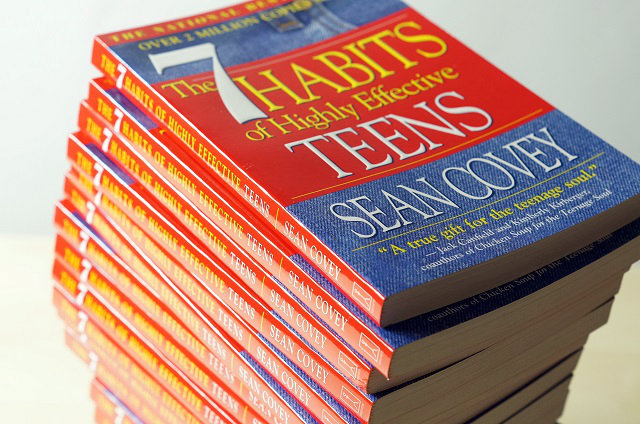
Our aspirations for our students extend beyond simply doing well in the exams. To this end, we try to encourage our students to better themselves for life with a series of self-help books that we distribute for free!

Connect with you teacher on a daily basis! Students can now take a picture of their work and send it via Whatsapp or Email to your teacher for feedback. Your teacher will get back to you within 24 hours and you can move on to more important stuff.
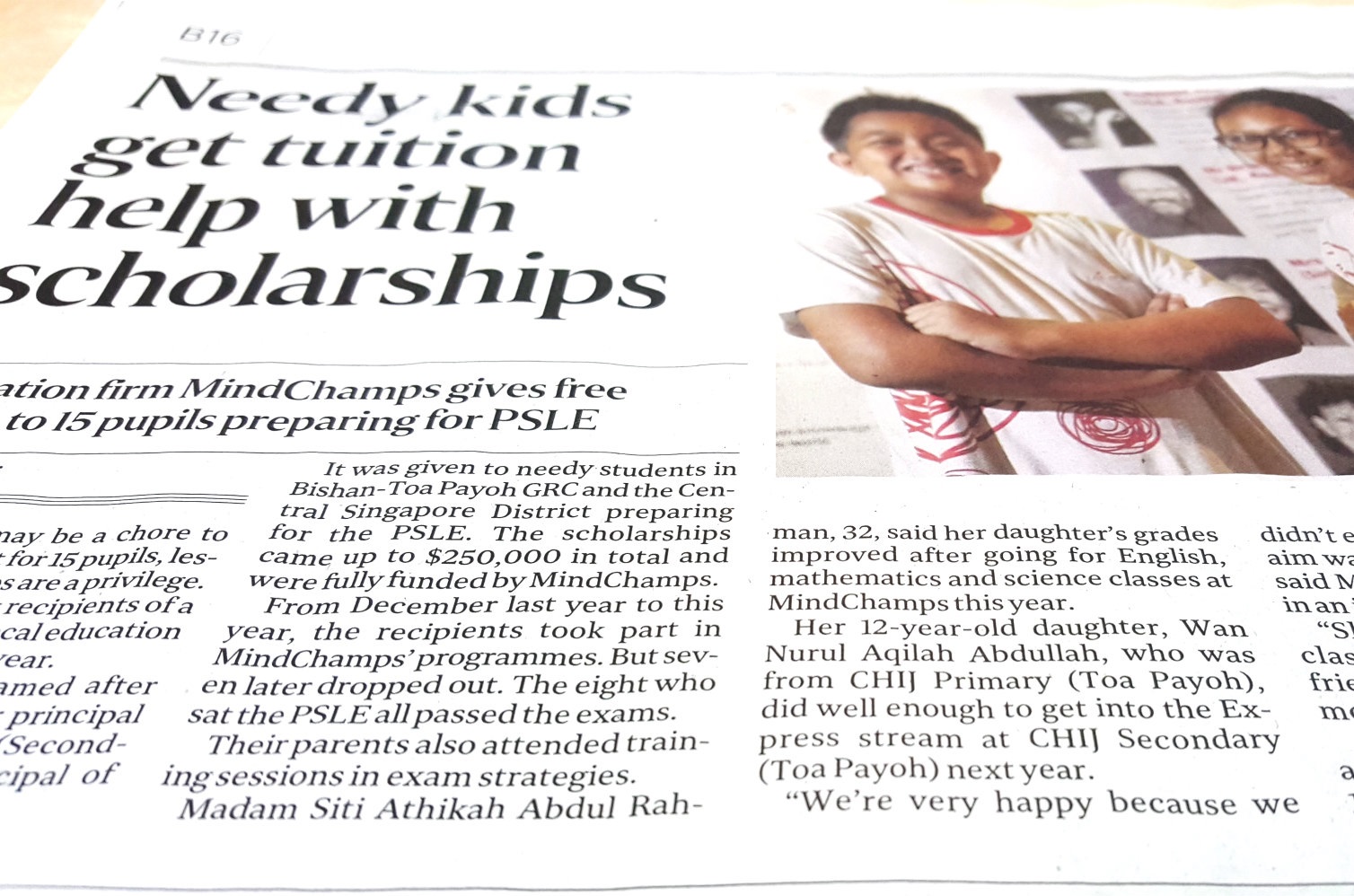
Written in our school constitution is mission is to help every student, notwithstanding their financial resources. That’s why we have a programme dedicated to students who face financial hardship, to help and nurture them as best we can.

There is no substitute for practice. So every week, we give an ample amount of practice problems for the student to take home. Our practice problems are specifically selected to repeat and reinforce what the student learns in class that week.
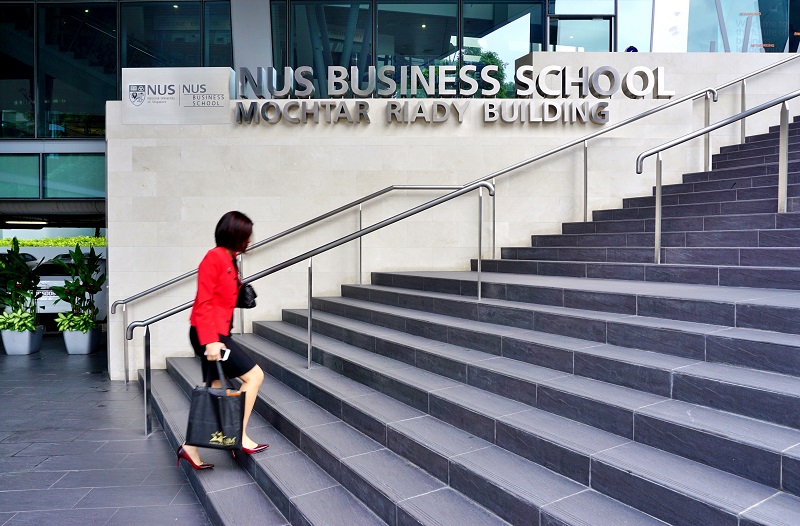
Seeing our students enter university is always a bittersweet moment. We are happy to have been a part of their journey in life, and we wish them all the best. Fortunately, many students do keep in touch with us, as well as with the friends they made here.
Each child’s learning needs are unique. We understand this and ensure that children with special learning difficulties can still perform well with our quality teaching methodologies. Our teachers are professionally trained, and will give each child the care they deserve.
Confidence is a crucial element to a child’s progress. A typical child has to battle hard to be heard in the average class size of 40 students during lessons. At the Math Lab, each student gets personalised attention from their tutor and our class size is limited to 5-12 students.
If you feel your child can have the potential to perform better, the Math Lab will help your child to reach the next level.
At The Math Lab, we are confident that we have the resources and experience to help your child achieve their best.
Blk 4, Queen's Road #02-121
Singapore 260004
Tel: 6475-0624
Fax: 6475-7125
ACRA Registration Number: 53331343X
© 2026 The Math Lab. Singapore Math Tuition. GP Tuition | Physics Tuition | Chemistry Tuition | Tuition Agency
Website Designed by Otaku